Review Article

설하신경 자극 시스템의 발전과 향후 전망

조형주 1 , * https://orcid.org/0000-0002-2851-3225
Hyung-Ju Cho 1 , * https://orcid.org/0000-0002-2851-3225
Author Information & Copyright
1연세의대 이비인후과학교실
1Department of Otorhinolaryngology, Yonsei University College of Medicine, Seoul, Korea
*Corresponding author: Hyung-Ju Cho, Department of Otorhinolaryngology, Yonsei University College of medicine, Seoul 03722, Korea, Tel: +82-2-2228-3605, Fax: +82-2-393-0580, E-mail: hyungjucho@yuhs.ac

© Copyright 2025 The Busan, Ulsan, Gyeoungnam Branch of Korean Society of Otolaryngology-Head and Neck Surgery. This is an Open-Access article distributed under the terms of the Creative Commons Attribution Non-Commercial License (http://creativecommons.org/licenses/by-nc/4.0/) which permits unrestricted non-commercial use, distribution, and reproduction in any medium, provided the original work is properly cited.

Received: Nov 16, 2025; Revised: Dec 08, 2025; Accepted: Dec 17, 2025

Published Online: Dec 31, 2025

ABSTRACT

Hypoglossal nerve stimulation (HGNS) has emerged as an alternative, with systems such as Inspire, Nyxoah Genio, and LivaNova Aura6000™ offering different technological approaches. Inspire therapy is FDA-approved and has recently advanced with Inspire V. The Genio System provides bilateral selective stimulation without an implanted battery, and the Aura6000™ employs targeted fascicular recruitment. Experimental ansa cervicalis stimulation demonstrates unique airway stabilization and synergistic effects with HGNS. Collectively, these innovations highlight progress toward more selective and patient-tailored neurostimulation therapies. Future large-scale trials are needed to confirm long-term efficacy and safety.

Keywords: Hypoglossal nerve; Sleep apnea, obstructive; Neurostimulation; Ansa cervicalis; Genioglossus

서론

HGNS(hypoglossal nerve stimulation)은 OSA(obstruc-tive sleep apnea) 환자 중 일부에서 CPAP(continuous positive airway pressure)에 대한 유망한 치료적 대안으로 자리매김하고 있다. 그러나, 치료 효능이 불충분한 경우(50% 이하의 AHI[apnea-hypopnea index] 감소 및 시간당 20회 이상의 사건 발생)는 환자의 최소 3분의 1에서 나타나는 것으로 보고되고 있다.1) 또한 치료 반응을 예측할 수 있는 명확한 기준은 여전히 규명되거나 제시되지 않고 있다.2) 현재까지 HGNS(Inspire® IV)를 위한 환자를 선정할 때 제한점이 존재한다. 중요한 제외 기준은 soft palate의 CCC(complete concentric collapse)이다. 그러나 OSA에서 oropharyngeal lateral wall collapse는 빈번히 발생하며 치료 반응에 부정적인 영향을 미치는 것으로 알려져 있다.2) 따라서 현재까지의 치료결과가 비교적 효과적임에도 불구하고, 치료 효능, 환자 접근성, 그리고 침습성 측면에서 한계를 지니고 있기 때문에 새로운 HGNS의 개발과 적용이 요구되고 있다.3) 이에 저자는 치료 효과를 높이기 위해 최근 새롭게 개발되어 시도되고 있는 방법들에 대하여 다루어 보고자 한다.

본론

Bilateral hypoglossal nerve stimulation

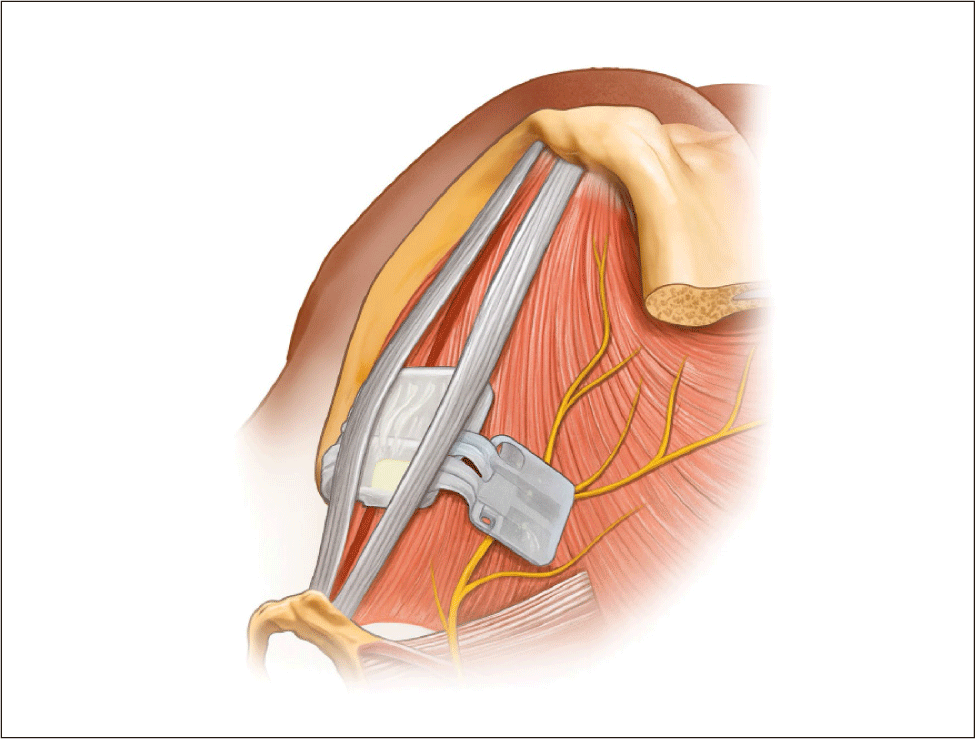
Nyxoah Genio System은 양측성 설하신경 자극(bilateral hypoglossal nerve stimulation)을 제공하는 장치로, 기존 신경 자극 치료 시스템의 한계를 보완하기 위해 개발된 새로운 접근 방식이다.4) 양측 설하신경(hypoglossal nerves)에 전극을 이식하여 양측성 자극을 제공하며,4) 특히 설하신경의 내측 가지(medial branches)에 전극을 배치하여(Fig. 1) 혀를 전방으로 돌출시키는 섬유(protruding fibers)만을 선택적으로 자극하도록 설계되었다.5) 단일 구성 요소 임플란트(single-component implant)로, 이식형 배터리나 호흡 감지 센서 리드가 필요하지 않다. 장치는 수면 중 턱 밑(submentum)에 부착되는 외부 컨트롤러(external controller)로부터 무선 주파수 에너지(radiofrequency energy)를 공급받는다.4) 일반적으로 하나의 절개만을 필요로 하여, 기존 HGNS 장치가 요구하는 2–3개의 절개에 비해 시술의 침습성을 현저히 줄인 장점을 가지고 있다.3) 또한 기존 Inspire 장치가 호흡 센서를 통해 호흡 주기에 맞춰 자극하는 것과 달리, Genio System은 규칙적인 듀티 사이클(duty cycle) 전략으로 작동하며, 이러한 자극 방식으로 대부분의 호흡 주기를 효과적으로 커버하는 것으로 소개되고 있다.6) 본 장치는 3.0 T 자기공명영상(magnetic resonance imaging, MRI)까지 전신 촬영에 조건부로 호환이 된다. 본 기기를 이용한 임상 시험(DREAM)의 대상자는 다음과 같다. BMI(body mass index) <35 kg/m2, AHI 15–100 events/hr 범위에 속하는 18세 이상의 성인 OSA 환자를 대상으로 평가되었으며, 기존 단측성 HGNS 장치(Inspire)의 주요 제외 기준인 CCC를 가진 환자에서도 사용 가능하도록 설계되었다.5) 본 연구의 12개월 추적 결과에서 최소 50% AHI 감소 및 최종 AHI <20 events/h를 달성한 환자는 전체의 63.5%였고, 최소 25% 산소 불포화 지수(oxygen desaturation index, ODI) 감소를 달성한 환자는 71.3%였다. 결국 평균 AHI와 ODI 모두 임상적으로 유의미한 감소를 보였으며, 특히 수면 중 가장 허탈이 심한 자세인 앙와위(supine)에서의 AHI도 유의하게 감소하였다.5) Nyxoah Genio System은 2019년에 유럽연합(Conformité Européenne, CE) 승인을 받았으며,5) 2025년 8월에 미국 식품의약국 시판 전 승인(Food and Drug Administration Premarket Approval, FDA PMA)을 받았다.
jcohns-36-4-87-g1
Fig. 1. Anatomical illustration of bilateral selective hypoglossal nerve stimulation using the Nyxoah Genio System. Electrodes are bilaterally positioned on the medial branches of the hypoglossal nerve to selectively activate protrusive tongue fibers.
Download Original Figure
Targeted hypoglossal nerve stimulation

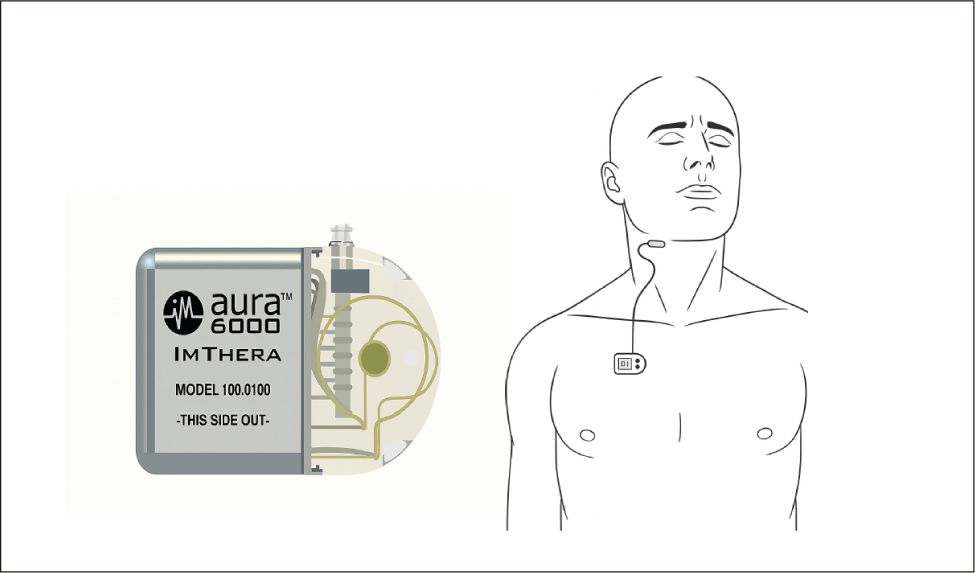
LivaNova aura6000™ System이 표적 설하신경 자극(targeted hypoglossal nerve stimulation, Targeted HGNS)을 위해 개발되었다. Targeted HGNS는 선택적 편측성 설하신경의 근위 부위를 자극하며, 기존 HGNS 장치의 한계를 보완하고, 보다 정밀한 신경 자극을 통해 상기도 개방을 유도하는 것을 목표로 한다. Targeted HGNS는 다중 접촉 커프 전극(multi-contact cuff electrode)을 설하신경의 main trunk에 사용하여, 전극의 특정 접점을 선택적으로 활성화함으로써 전체 신경이 아닌 원하는 신경 섬유 다발(distinct fascicles)을 정밀하게 자극하는 것이 가능하다.5) 전기자극 유발은 호흡 주기에 의존하지 않고, 자극 필드 벡터의 시간적 변화(temporal variation of stimulation field vectors)를 통해 상기도 근육의 긴장도(toning)를 높이는 것을 치료 원리로 작동한다. Aura6000™ 시스템은 이식형 펄스 발생기(IPG)와 자극 리드(stimulation lead)로 구성되며 배터리는 유도(induction) 방식으로 충전되며 수술 시 2개의 절개가 필요하다(Fig. 2). 2013년 파일럿 연구에서 12개월 동안의 긍정적 OSA 치료 결과를 보였고,7) 현재 임상시험(LivaNova-OSPREY)이 진행 중이며(ClinicalTrials.gov: NCT04950894) 아직 미국 FDA 승인은 획득하지 못한 상태이다.
jcohns-36-4-87-g2
Fig. 2. Anatomical illustration of Aura6000™ Neurostimulator. Electrodes are unilaterally positioned on the proximal trunk of hypoglossal nerve to selectively activate nerve fibers through multi-contact electrode cuff.
Download Original Figure
Ansa cervicalis stimulation

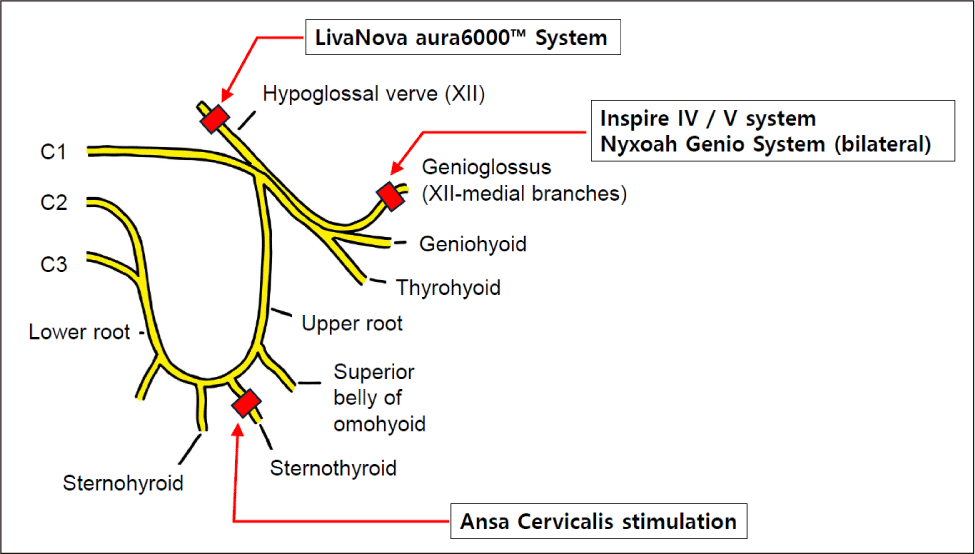
ACS(ansa cervicalis stimulation)은 OSA 치료를 위한 혁신적인 신경 조절 전략으로, 기존의 설하신경 자극(hypoglossal nerve stimulation, HNS) 요법의 한계를 보완하기 위해 제안되었다. ACS는 아직 개발 단계의 실험적 신경자극 기법으로, 주로 약물 유도 수면 내시경(drug-induced sleep endoscopy, DISE) 하에서 초음파 유도 경피적 전극(hook-wire percutaneous electrode) 방식으로 적용되었고 아직까지 상업적 시스템은 개발되지 않았다. 기본적인 메커니즘은 인두 구조물에 미측 견인(caudal traction)을 발생시켜 상기도 안정화를 유도하는 것이다.2,8,9) ACS는 경부 신경총에서 형성되며 설골 아래 근육(infrahyoid muscles)에 분포하는 경부 고리 신경(ansa cervicalis)을 자극한다(Fig. 3).10) 특히 흉골갑상근(sternothyroid muscle)을 자극하여 수축을 유도하여 흉골갑상근은 갑상 연골(thyroid cartilage) 부착부위를 당겨 인두를 아래쪽으로 당기게 된다.11) 이러한 미측 견인은 상기도를 세로로 늘리고(longitudinal stretching), 인두 벽의 순응도(compliance)를 감소시키며, 인두 주변 조직 압력(peripharyngeal tissue pressure)을 낮춤으로써 상기도 개방성을 증가시키게 되며, 이는 폐 용적 변화에 의해 발생하는 기관지의 미측 견인 효과와 유사하다.2,11,12) OSA 환자 41명을 대상(평균 나이는 53.7±10.7세, 평균 BMI 31.9±2.8 kg/m2, 평균AHI 43.9±17.9 events/h)로 ACS 신경 자극 실험을 진행한 구조적 변화 평가 임상시험에서 상기도 폐쇄 압력(collapsibility)과 기류(airflow)를 유의미하게 개선하는 효과를 보였으며, 이러한 효과는 단측성 보다 양측성 ACS에서 통계적으로 더 유의미하게 크게 나타났다.8) 특히 ACS는 HGNS와 달리 혀 기저부 외의 영역, 특히 인두의 측벽에 더 안정화 효과를 보였다.8) 특이하게도 ACS는 구인두 측벽, 연구개, 후두개 폐쇄를 유발하는 상황에서 Pcrit와 Popen을 가장 크게 감소시켰고, BMI가 높은 대상자에서 Pcrit 감소 폭이 더 큰 경향을 보였으며, 이는 HGNS와는 대비되는 결과이다.8,11,13) ACS를 HGNS와 함께 적용했을 때, 두 자극 방식의 다른 메커니즘 덕분에 상승 효과를 보였는데, 단독 HGNS에 ACS를 추가했을때 흡기 기류(VIMAX)가 증가하였고, 구개 뒤 단면적이 증가하였으며, 호기 기류(VE)가 증가하였다. 이러한 결과는 ACS가 흉골갑상근 수축을 통해 인두를 미측으로 견인하여 상기도 벽을 강화하고, 이로 인해 HNS의 혀 전방 돌출력이 인두를 확장시키는 효과가 증폭될 수 있음을 시사한다.10)
jcohns-36-4-87-g3
Fig. 3. Anatomical illustration showing the hypoglossal nerve (XII) and Ansa cervicalis, along with various nerve stimulation systems used to treat sleep apnea by targeting tongue and throat muscles.
Download Original Figure
Next-Generation inspire V therapy system

5세대 Inspire 시스템(Inspire V)은 Inspire Medical Systems에 의해 개발되었으며, 2024년 8월에 미국 FDA 승인을 받았다. 이 시스템은 중등도에서 중증의 폐쇄성 수면 무호흡증(OSA) 환자를 치료하는 데 사용되며, 시술의 적응증 및 제외 기준은 기존 Inspire IV와 동일하게, 중등도–중증 OSA 환자로 CPAP 치료에 불내성이며, 연구개에서 CCC가 없는 환자에게 적용한다. Inspire IV 시스템과의 가장 큰 변화는 기존의 호흡 감지 리드가 IPG(implantable pulse generator)에 내장된 형태로 변경된 것이다. 이를 통해 호흡 감지 리드 이식 과정이 생략되어 수술 시간이 단축되었다. 아울러 흉곽 절개 없이 액와부 피하 주머니(axillary subcutaneous pocket)에 IPG를 이식함으로써 미용적 결과를 개선하고 기기 관련 불편감을 최소화하였다. 현재 싱가폴에서 임상시험 중이며(ClinicalTrials.gov: NCT06540716), 한국에는 현재 이의 도입 절차가 진행 중이다.

결론

본 논문에서는 OSA 치료를 위한 다양한 신경 자극 접근법과 최신 장치들에 대하여 살펴보았다(Table 1). HGNS은 기존의 수술법으로 실패하였거나 CPAP 사용이 어려운 환자에게 유망한 대체 치료로 자리매김하였으나, 현재의 HGNS 시스템은 치료 효능, 환자 접근성, 침습성, 그리고 환자 선정 기준에서 한계를 지닌다. 이러한 제약을 극복하기 위해 본문에서 소개한 다양한 신경 자극 접근법은 OSA 치료의 새로운 패러다임을 제시하고 있으며, 각 장치와 기술들은 서로 다른 기전과 환자 특성에 따라 상호 보완적 역할을 수행할 것으로 예상된다. 향후 대규모 무작위 대조 임상시험과 장기 추적 연구를 통해 이러한 치료법의 효능, 안전성, 그리고 심혈관계 및 삶의 질에 대한 영향을 면밀히 검증하는 것이 필요할 것이며, 이러한 연구는 OSA 환자 맞춤형 치료 전략을 확립하고, 기존 치료의 한계를 극복하는 데 중요한 기여를 할 것이다.

Table 1. Comparison of Features of Latest Neurostimulation Systems
Item Nyxoah Genio System LivaNova aura6000™ System Ansa Cervicalis Stimulation Inspire V
Stimulation Method Bilateral Hypoglossal Nerve Stimulation (Bilateral HNS) Targeted Hypoglossal Nerve Stimulation (Targeted HGNS) Ansa cervicalisStimulation Unilateral Hypoglossal Nerve Stimulation (Inspire Therapy, 5th Gen)
Key Features - Electrode implantation on medial branches of bilateral hypoglossal nerves
- RF energy supply from external controller
- No implantable battery/respiratory sensor needed
- Single incision, minimally invasive
- Use of multi-contact cuff electrode on main trunk of hypoglossal nerve
- Precise stimulation of specific nerve fiber bundles
- Independent of respiratory cycle; modulation of muscle tone via changing stimulation field vectors
- Composed of Implantable Pulse Generator (IPG) and stimulation lead
- Experimental stage, no commercial system
- Ultrasound-guided percutaneous electrode use
- Generates caudal traction on pharyngeal structures
- Stabilization of upper airway and strengthening of lateral pharyngeal walls
- Respiratory sensing lead integrated into IPG
- IPG implantation in axillary subcutaneous pocket without chest incision
- Reduced surgical time, improved cosmetic results
- Same existing indications and exclusion criteria
Target Patient - Adults (18+) with OSA, BMI < 35, AHI 15–100
- Patients with CCC (Complete Concentric Collapse) can also use
- Patients requiring selective unilateral HGNS
- Currently in clinical trials
Experimental application, clinical trial stage Moderate to severe OSA, CPAP intolerance, patients without CCC
Clinical Outcomes 12-month follow-up: >50% reduction in AHI in 63.5%, >25% reduction in ODI in 71.3% - Positive results in 12-month pilot study
- Clinical trials ongoing
- Significant improvement in upper airway closing pressure and airflow
- Synergistic effect when combined with HGNS
Latest system (FDA approved in 2024), clinical trials ongoing
Approval Status CE Mark (2019)
FDA PMA Approved in Aug 2025
CE Mark
FDA approval not yet obtained
No commercial approval FDA Approved in Aug 2024, In process of introduction to Korea
Specific Points Accessible to patients with CCC (major exclusion criterion for existing HGNS), minimally invasive Precise stimulation via multi-contact electrodes, independent of respiratory cycle Lateral pharyngeal wall stabilization, efficacy increases with higher BMI, synergistic effect with HGNS Integrated respiratory sensing lead, simplified surgery, cosmetic improvement
Download Excel Table

Acknowledgements

Not applicable.

Funding Information

Not applicable.

Conflicts of Interest

No potential conflict of interest relevant to this article was reported.

Author Contribution

The article is prepared by a single author.

Ethics Approval

Not applicable.

References

1.

Strollo PJ Jr, Soose RJ, Maurer JT, de Vries N, Cornelius J, Froymovich O, et al. Upper-airway stimulation for obstructive sleep apnea. N Engl J Med. 2014;370(2):139-49.

2.

Li Y, Schwartz AR, Kent DT. Airflow-based prediction of lateral wall collapse: advancing personalised hypoglossal nerve stimulation in obstructive sleep apnoea. Eur Respir J. 2025;66(4):2501567.

3.

Osman AM, Carney AS, Ooi EH, Joshi H, Toson B, Tran C, et al. Novel hypoglossal stimulation markedly improves airflow and airway collapsibility in OSA. Chest. Forthcoming 2025.

4.

Woodson BT, Kent DT, Huntley C, Hancock MK, van Daele DJ, Boon MS, et al. Bilateral hypoglossal nerve stimulation for obstructive sleep apnea: a nonrandomized clinical trial. J Clin Sleep Med. 2025;21(11):1883-91.

5.

Serghani MM, Heiser C, Schwartz AR, Amatoury J. Exploring hypoglossal nerve stimulation therapy for obstructive sleep apnea: a comprehensive review of clinical and physiological upper airway outcomes. Sleep Med Rev. 2024;76:101947.

6.

Suurna MV, Jacobowitz O, Chang J, Koutsourelakis I, Smith D, Alkan U, et al. Improving outcomes of hypoglossal nerve stimulation therapy: current practice, future directions, and research gaps. Proceedings of the 2019 International Sleep Surgery Society Research Forum. J Clin Sleep Med. 2021;17(12):2477-87.

7.

Mwenge GB, Rombaux P, Dury M, Lengele B, Rodenstein D. Targeted hypoglossal neurostimulation for obstructive sleep apnoea: a 1-year pilot study. Eur Respir J. 2013;41(2):360-7.

8.

Li Y, Schwartz AR, Zealear D, Shotwell MS, Hall ME, Lindsell CJ, et al. Ansa cervicalis stimulation effects on upper airway patency: a structure-based analysis. Eur Respir J. 2025;65(1):2400901.

9.

Kairaitis K, Heiser C, Vanderveken OM. On the role of ansa cervicalis stimulation in the era of personalised medicine. Eur Respir J. 2025;65(1):2402137.

10.

Kent DT, Zealear D, Schwartz AR. Ansa cervicalis stimulation: a new direction in neurostimulation for OSA. Chest. 2021;159(3):1212-21.

11.

Li Y, Richard KE, Schwartz AR, Zealear D, Lindsell CJ, Budnick HA, et al. Quantitative effects of ansa cervicalis stimulation in obstructive sleep apnea. Am J Respir Crit Care Med. 2023;207(8):1097-9.

12.

Amatoury J, Kairaitis K, Wheatley JR, Bilston LE, Amis TC. Onset of airflow limitation in a collapsible tube model: impact of surrounding pressure, longitudinal strain, and wall folding geometry. J Appl Physiol. 2010;109(5):1467-75.

13.

Suurna MV, Steffen A, Boon M, Chio E, Copper M, Patil RD, et al. Impact of body mass index and discomfort on upper airway stimulation: ADHERE registry 2020 update. Laryngoscope. 2021;131(11):2616-24.