
Journal of Clinical Otolaryngology Head and Neck Surgery
The Busan, Ulsan, Gyeoungnam Branch of Korean Society of Otolaryngology-Head and Neck Surgery
Original Articles

내시경 귀수술을 위한 내시경 고정장치의 개발

이일우1https://orcid.org/0000-0001-9561-6585, 공수근1https://orcid.org/0000-0002-6783-3766, 왕수건1, 이진춘1,*https://orcid.org/0000-0002-4056-8763
Il-Woo Lee1https://orcid.org/0000-0001-9561-6585, Soo-Keun Kong1https://orcid.org/0000-0002-6783-3766, Soo-Geun Wang1, Jin-Choon Lee1,*https://orcid.org/0000-0002-4056-8763
1부산대학교 의과대학 이비인후과학교실 및 부산대학교병원 의생명연구원
1Department of Otorhinolaryngology-Head and Neck Surgery, Pusan National University School of Medicine, Busan, Korea
*Corresponding author: Jin-Choon Lee, Department of Otorhinolaryngology-Head and Neck Surgery, Pusan National University School of Medicine, Busan 49241, Korea, Tel: +82-55-360-2652, Fax: +82-55-360-2162, E-mail: ljc0209@hanmail.net

© Copyright 2026. The Busan, Ulsan, Gyeoungnam Branch of Korean Society of Otolaryngology-Head and Neck Surgery. This is an Open-Access article distributed under the terms of the Creative Commons Attribution Non-Commercial License (http://creativecommons.org/licenses/by-nc/4.0/) which permits unrestricted non-commercial use, distribution, and reproduction in any medium, provided the original work is properly cited.

Received: Feb 23, 2026; Revised: Mar 12, 2026; Accepted: Mar 27, 2026

Published Online: Mar 31, 2026

ABSTRACT

Objectives/Hypothesis: The objective of this study is to develop a lightweight, rigid endoscopic fixation system integrated into a headset, designed to maintain stability and ensure patient safety even during unexpected head movements. Methods: We developed the endoscopic holder system by combining the advantages of Raman ‘s 2004 Yasargil retractor method and the 2008 headband method. We confirmed the usefulness of this device through cadaveric dissection. Results: A malleable endoscopic holder system, securely fixed on a helmet with a chinstrap, was successfully developed as designed. The system demonstrated excellent adaptability in the cadaveric model, providing a stable and secure fixation of the endoscope throughout the procedures. No technical issues or instability related to the fixation device were observed during the cadaveric dissection. Furthermore, the device allowed for an unhindered two-handed technique, with no interference or collisions between the surgical instruments, ensuring a smooth and precise operative flow. Conclusion: This device addresses the limitation of single-handed manipulation—the primary drawback of conventional endoscopic surgery—by enabling a two-handed technique under a visual field that rivals or surpasses that of a surgical microscope.

Keywords: Endoscopic holder; Head-set fixed; Two-hand surgery

서론

중이수술의 역사는 복잡한 중이구조를 적절하게 노출시키기 위한 방법의 발전사라고 할 수 있다. 또한 현미경의 도입, 유양동의 골부를 노출하기 위한 드릴의 사용 등 수술기구의 발전과 새로운 기구의 도입이 수술의 수준을 향상시켜 왔다. 중이수술에 내시경이 본격적으로 도입된 시기는 90년대 초반이다.1,2) 최근 10여 년 동안 획기적인 발전을 보여 상고실 진주종의 제거, 고실성형술 등에 내시경 수술은 보편적인 수술방법으로 인정되고 있다.

귀내시경 수술의 가장 큰 단점은 한 손으로 수술기구를 조작해야 한다는 점이다. 이를 위해 내시경수술 전용 기구들이 개발되어 있기는 하지만 양손 수술을 대신하지는 못한다. 이러한 단점을 극복하기 위해 필요한 것이 내시경 홀더이다.

내시경을 사용하는 외과적 수술에 내시경 고정장치를 도입한 것은 이미 70년 대 후반에 시작되었다.3,4) 이들 내시경 고정장치는 대부분 수술대에 고정이 되도록 설계가 되어 복강이나 상하지 내시경 수술에 유용하게 활용되고 있다.59) 귀내시경을 위한 고정장치도 수술이 활발히 보급되기 시작한 2000년대 중반부터 여러 연구자에 의해 고안되었는데, 이들 장치 또한 대부분이 수술대 고정형이다.1012) 그러나 복강이나 상하지와는 달리 귀 내시경의의 경우 테이블에 내시경이 고정될 경우 환자의 예고되지 않은 갑작스러운 움직임시 내이구조물에 치명적인 손상이 가해질 수 있으며, 두개저부의 심각한 손상으로 사망에 이를 수도 있다. 이를 보완하기 위한 방법으로 헤드셋을 설치하고 내시경을 헤드셋에 고정시키는 방법이 소개되었으나, 이에 대한 구체적인 사용방법이나 상업적으로 유용하게 적용된 예는 없다.13)

본 연구의 목적은 헤드셋에 안정적으로 고정되어 환자의 갑작스러운 움직임에도 안전하고, 마그네슘 재질을 사용하여 가벼우면서도 시술부위에 따라 손쉽게 작동이 가능한 귀수술용 내시경고정장치를 개발하는데 있다. 이를 통하여 귀내시경 수술의 가장 큰 단점인 한 손 수술의 불편함을 해결하여 보다 광각의 수술시야에서 양손으로 수술을 함으로써 현미경과 내시경의 장점을 모두 활용할 수 있는 방법을 제시하고자 한다.

대상 및 방법

내시경 홀더의 개발

본 연구에서 개발된 내시경 홀더 시스템은 턱끈을 통해 두부에 안정적으로 밀착되는 헬멧 부위, CCD(charge-coupled device) 카메라와 내시경을 통합하여 고정하는 장치 고정부(holder), 그리고 헬멧과 고정부를 매개하는 다관절 연결부의 세 부분으로 구성된다. 세 부분 모두 기존에 개발되어 있는 내시경 홀더 시스템의 단점을 보완하고 장점을 활용하면서 강화한 특징을 가진다.

먼저 헬멧은 스포츠용으로 개발되어 있는 헬멧의 기본틀을 적용하고 안정된 고정을 위해 특수개발된 턱끈을 사용하였다. 두번째로 장치고정부는 내시경과 카메라의 무게중심을 고려하여 카메라 본체를 지지할 수 있도록 고안되었다. 마지막으로 본 시스템에서 가장 중요한 부분은 헬멧과 홀더를 연결하는 연결부의 개발이다. 연결부는 신경외과 수술 기구인 Yasargil 고정장치의 원리를 차용하였다.14) 연결부는 14 cm 이상인 내시경이 적용될 수 있는 충분한 길이, 내시경과 카메라의 무게를 지탱할 수 있는 안정성이 있으면서 무게는 가벼워야 한다. 이를 위해 Yasargi 장치보다 굵은 지름 1 cm, 높이 1.5 cm의 염주알 16개를 철선으로 연결하였고 무게를 줄이기 위해 금속 중 비중이 1.738 g/cm3로 가장 낮은 마그네슘을 사용하였다.

임상전 적용

개발된 모델의 임상사용전 점검을 두부 모형과 사체 모델에 적용하여 편의성과 안정성을 확인하였다.

결과

내시경 홀더의 개발

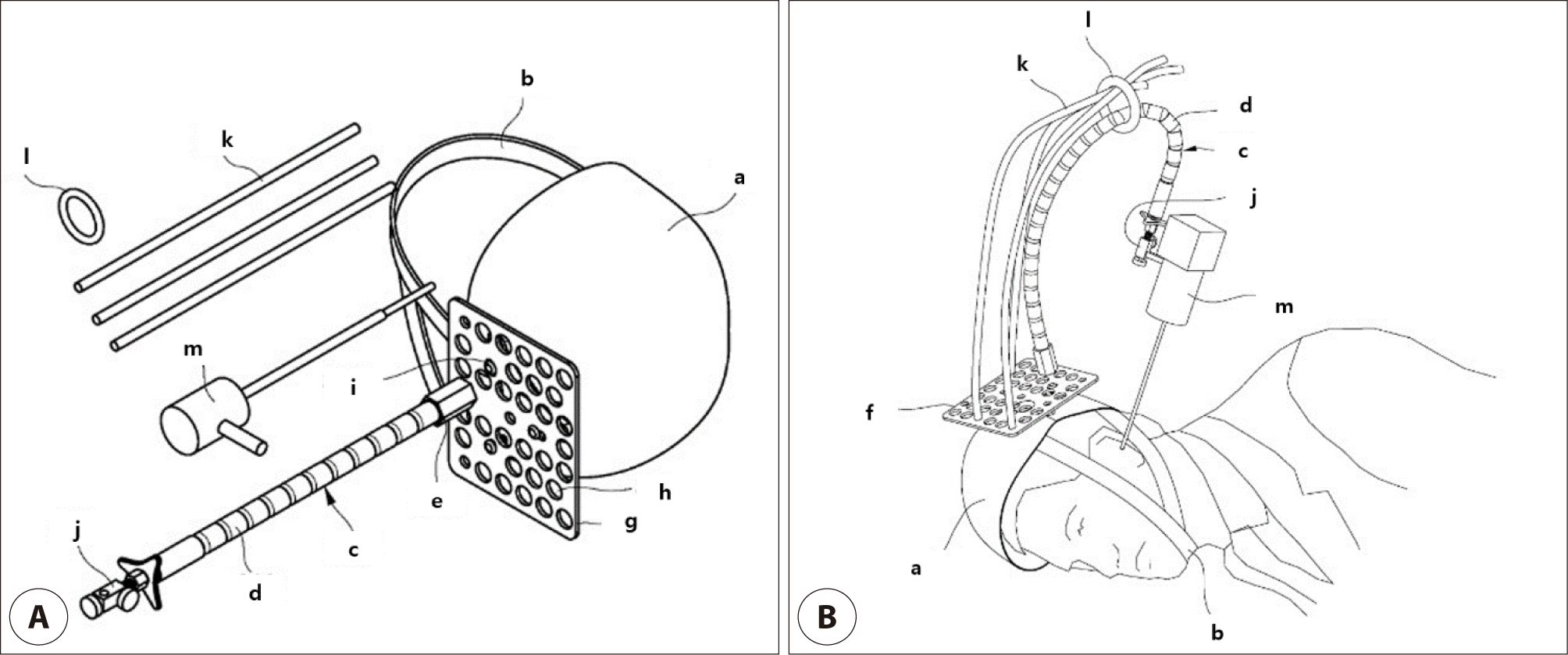
본 내시경 고정장치는 이비인후과 수술용 내시경 모듈을 안정적으로 지지하기 위해 설계되었으며, 크게 세 부분으로 구성된다. 턱끈으로 고정되는 헬멧, 다방향 조절이 가능한 관절부(articulating arm), 관절의 위치를 고정하는 고리부(ring unit), 그리고 방향 전환을 지원하며 고리부를 지지하는 관절부지지관(joint support rod)이 착탈식으로 결합되어 최적의 수술 시야를 제공한다(Fig. 1).
jcohns-37-1-3-g1
Fig. 1. Exploded view of the components of the endoscopic holder system (A) and schematic diagram of the endoscopic holder system mounted on a patient (B). a: helmet, b: chinstrap, c: articulating arm (or joint section), d: articulated structure (or linkage), e: holder unit, f: helmet mounting unit (or fixation unit), g: fixation plate (or mounting plate), h: fastening hole (or mounting hole), i: positioning hole, j: endoscope clamp (or fixator), k: joint support rod (or supporting tube), l: ring unit (or o-ring / hook), m: endoscope.
Download Original Figure

관절부는, 상부에 관통공(체결공, fastening hole) 이 형성된 볼록한 형상으로 내부가 비어 있는 관절구조체(articulated structure) 및, 복수의 관절구조체를 서로 겹치게 한 다음 관절구조체의 관통공에 삽입하여 연결하는 휘어짐이 가능한 연결선을 포함하는 것이 특징이다. 고정판에는 수술 환자의 머리 위치에 따라 관절부의 위치를 변경할 수 있도록 다양한 위치에 복수의 체결공이 관통하여 형성되도록 구성하였다. 고정판에는 관절부지지관이 고정된 상태에서 방향 전환할 수 있도록 방향전환부가 설치되되, 방향전환부는 고정판에 형성되는 체결공의 내측에 함몰 형성되는 회전공간부 및 회전공간부에 수용되어 회전 동작을 수행하고, 체결공에 일치하여 노출된 상태로 관절부지지관이 삽입되어 고정되는 고정공을 가지는 베어링부를 포함한다. 이로써 내시경 귀수술을 위한 내시경 고정장치로, 턱끈이 구비된 헬멧과 헬멧에 착탈 가능하게 결합하는 동시에 내시경 모듈을 지지하고 다방향으로 휘어질 수 있도록 형성된 관절부, 관절부의 구부러진 위치에 내측면이 걸림 고정되는 고리부 및 헬멧에 결합하는 동시에 고리부를 지지하고 방향 전환이 가능한 관절부지지관을 포함하는 구조로 완성하였다.

두부 모형 및 사체모델에서의 적용

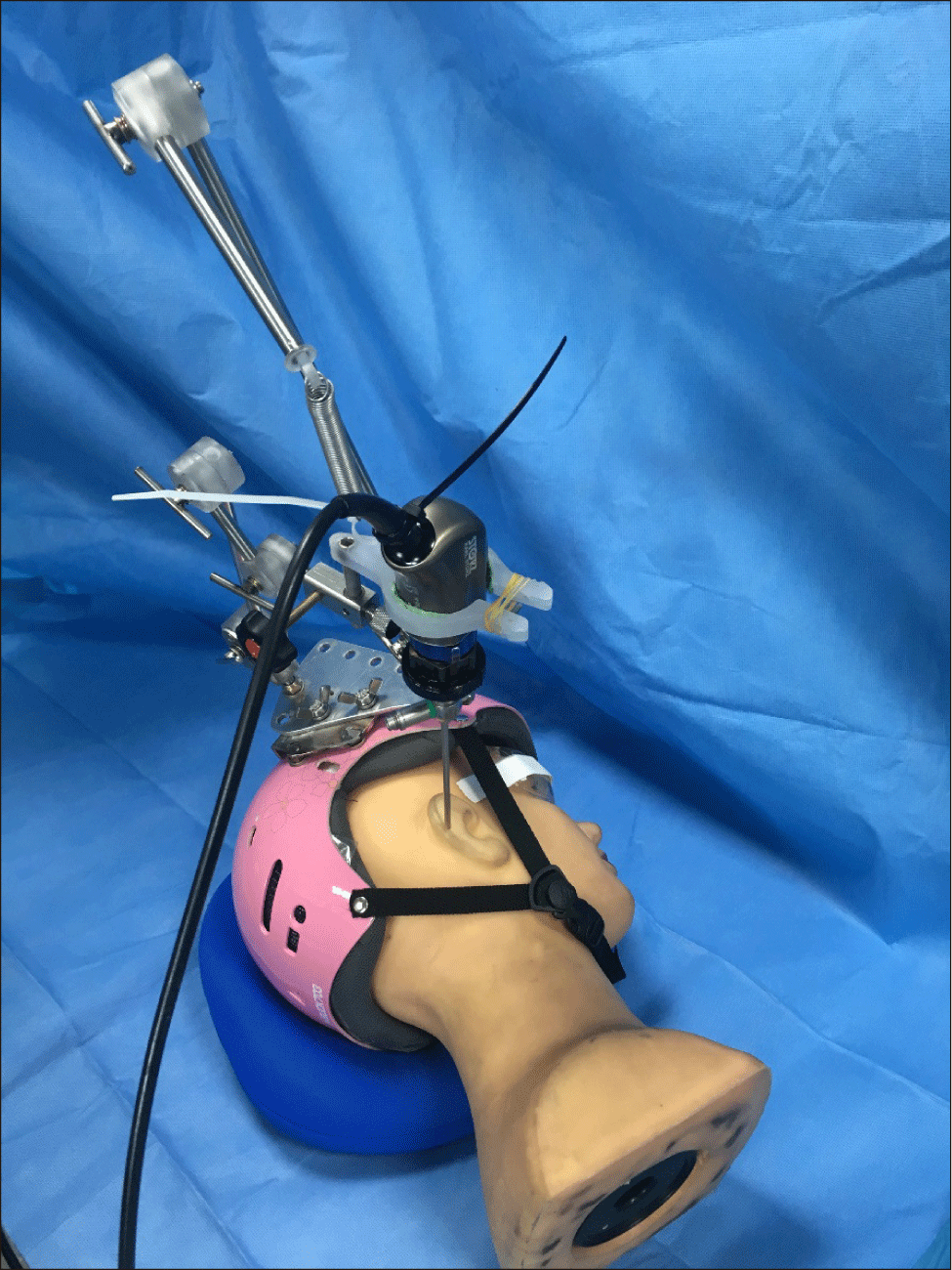
개발된 본 장치를 두부 모형에 실제로 적용하여 장착 후 안정성 및 가상적인 환자(모형)의 움직임에 따른 장치의 안정성을 확인하였다(Fig. 2).
jcohns-37-1-3-g2
Fig. 2. Application of the helmet-mounted endoscopic holder on a head model. This is a representative photograph of the proposed endoscopic holder system mounted on a human head model. The device is securely stabilized using a helmet-based platform with a chinstrap. The articulated arm allows for precise positioning and steady maintenance of the endoscope angle, facilitating hands-free endoscopic procedures in otolaryngology.
Download Original Figure

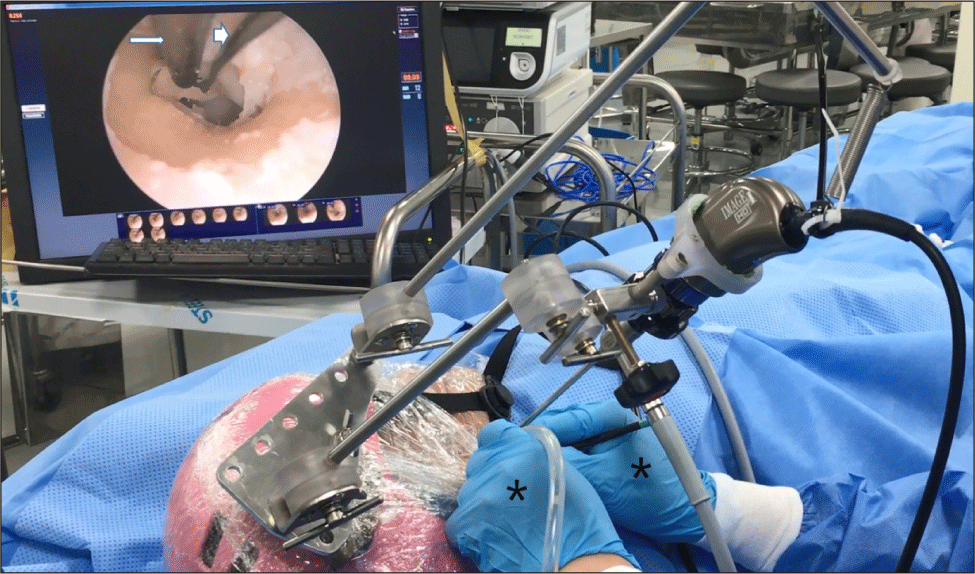
제작된 시제품을 사체 모델에 적용하여 그 유용성을 평가하였다. 3인의 이비인후과 전문의가 장치 장착 및 실습 과정을 수행한 결과, 모든 술자가 본 장비의 고정력과 시야 확보 능력에 대해 높은 만족도를 나타냈다. 특히 장비 사용 시 내시경의 위치가 안정적으로 유지됨으로써 보조 인력 없이도 원활한 양손 수술이 가능함을 확인하였다(Fig. 3).
jcohns-37-1-3-g3
Fig. 3. Validation of the helmet-mounted endoscopic holder through cadaveric dissection. This figure shows cadaveric application of the helmet-mounted endoscopic holder system. The endoscopic view on the monitor displays the ossicles (malleus) being manipulated. A suction tip (white arrow) and a surgical pick (arrowhead) are used simultaneously within the surgical field. The holder system provides stable endoscopic visualization, enabling the surgeon to perform a two-handed technique (asterisks) for precise instrumentation without the need for an assistant or holding the endoscope manually.
Download Original Figure

고찰

내시경이 귀수술에 도입되어 본격적으로 사용이 되기 시작한 1990년대 이후 많은 이과의들이 내시경의 편리함과 필요성에 공감하여 귀수술에서 내시경의 사용이 급격하게 확대되고 있다.1520) 내시경을 이용한 중이 수술의 가장 큰 장점은 고막 및 중이의 주요구조물을 관찰하기 위해 별도의 피부절개 없이 현미경 시야보다 더 광각의 수술시야를 확보할 수 있다는 점이다.1,21,22) 반면 내시경을 한 손으로 잡아야 하기 때문에 한 손 만으로 수술을 해야 하는 결정적인 단점이 있고, 이 단점으로 인해 현미경 수술에 경험이 많은 숙련된 이과의가 내시경 수술에 접근하는데 방해가 되고 있다.11,12)

따라서 귀수술에서 내시경수술이 보편화 되기 위해서는 양손으로 수술하는 방법이 개발되어야 하는데 이를 해결할 수 있는 방법이 내시경 고정장치의 개발이다. 귀수술에 사용되는 내시경의 길이는 14–18 cm이고 CCD 카메라 장치가 부착되어야 하기 때문에 내시경을 안정적으로 고정하는 일은 쉽지 않다. 대부분의 내시경 고정장치가 수술대나 현미경에 고정이 되도록 고안된 이유가 바로 이런 안정성을 높이기 위해서이다.11,12,23,24) De Zinis 등12)은 3개의 관절(supporting arm)으로 구성된 수술대 고정형 내시경홀더를 이용하여 10명의 소아환자를 대상으로 성공적인 고막성형술을 보고하였지만, 내시경 홀더의 구체적인 제작방법이 기술되어 있지는 않다. Khan 등11)은 70 × 40 × 10 mm 크기의 금속판에 지름 16 × 16 mm의 슬롯(slot)을 가공한 후 현미경의 경통부(head)를 제거한 자리에 장착하는 방법으로 내시경홀더를 제작하였다. 그는 이 홀더를 사용하여 179례의 연골 고실성형술을 성공적으로 시행하였다. 그 외에도 내시경 고정장치에 대해 보고한 다수의 논문이 내시경으로 고정하는 방법으로 수술대나 현미경과 같이 환자와 분리되어 있는 장비에 부착하였다.11,12,23,25,26) 이런 방법의 가장 큰 단점은 국소마취 혹은 전신마취 중 환자가 예고 없이 움직일 경우 고정되어 있는 내시경장치에 의해 수술부위가 손상될 수 있다는 점이다. 이러한 외상은 특히 해부학적으로 두개저와 접하고 있는 외이도와 비강의 수술 시에는 치명적인 손상으로 이어질 수 있다. 귀수술 도중 환자가 내시경 방향으로 움직이는 일이 발생할 경우 내시경 끝부분에 의해 고막, 내이 및 두개저의 주요신경손상이 일어날 수 있고 두개내 구조의 손상은 생명의 위험도 초래할 수 있다. 이러한 단점을 해결하기 위한 방법은 내시경 고정장치를 환자의 머리에 장착하는 것이다. 기존의 논문 중 내시경 고정장치를 환자의 머리에 장착하여 보고한 논문은 한 편 있다. Mitchellson등13)은 이경(ear speculum) 홀더를 헤드 밴드에 장착하여 내시경 홀더로 전용하였으나, 플라스틱 재질 헤드밴드의 특성상 두부에 안정적으로 고정되지 못하는 한계가 있었다. 또한 해당장치는 CCD 카메라의 무게와 부피를 전혀 고려하지 않고 설계되어, 실제 카메라가 장착된 내시경 시스템에는 적용이 불가능하다는 단점이 있다. 본 연구에서 개발된 내시경 홀더는 기존에 소개된 수술대나 현미경 장착형의 단점인 수술시 갑작스러운 움직임에 의한 환자의 손상을 방지할 수 있도록 환자의 머리에 헬멧을 착용시켜 내시경을 고정할 수 있게 하였다. 얼굴 전체에 고정이 될 수 있도록 헬멧을 턱끈으로 고정시키도록 하여 CCD 카메라의 무게에도 안정적으로 고정될 수 있도록 설계하였다.

본 내시경 홀더의 자유로운 위치 조절 기전은 Yasargil 리트랙터(retractor)의 구동 원리를 응용한 것으로, 이를 통해 수술 중 정교한 다각도 가변성을 확보하였다.14) Raman은 내시경 홀더 시스템에 Yasargil retractor의 개념을 도입하였다.27) 그는 Yasargil 리트랙터의 이경 홀더 내부에 소석고(plaster of Paris)**나 치과용 인상재(dental molding material)를 충전하여 이경(ear speculum)을 고정하고, 해당 홀더에 내시경을 거치하는 방식을 제안하였다. 그러나 이 방법도 홀더를 수술대에 고정시킴으로서 내시경에 의한 환자 손상의 위험이 있고, 이경이 카메라가 장착된 내시경의 무게를 이겨내지 못한다는 단점이 있다. 본 연구에서 개발된 내시경 홀더는 Raman이 2004년에 발표했던 Yasargil 리트랙터를 이용한 방법과 2008년 발표한 헤드밴드를 이용한 방법의 장점을 조합하여 조정이 쉬우면서 안전한 장치이다.

본 연구는 새로운 헬멧형 내시경 홀더의 구조적 설계와 초기 사용성을 제안하는 데 집중하였다. 다만, 실제 임상 적용 및 사체 실습 과정에서 시술 시간 단축이나 고정 정밀도 등에 대한 객관적인 정량적 평가가 이루어지지 않았다는 점은 본 연구의 한계로 남는다. 술자들의 주관적 만족도는 높았으나, 향후 통계적 검증이 가능한 정량적 지표를 도입하여 본 장치의 효용성을 더욱 명확히 규명할 필요가 있다.

결론

본 연구를 통하여 조정이 용이하고 안전한 내시경 고정장치가 개발되었다. 본 연구를 통해 개발된 헬멧형 내시경 홀더는 사체 모델에서 우수한 고정력과 조작 편의성을 입증하였다. 비록 정량적 분석을 통한 보완 연구가 추가로 필요하지만, 본 장비는 기존 홀더의 한계를 극복하고 효율적인 양손 수술을 가능하게 하는 실용적인 대안이 될 것으로 기대된다.

Acknowledgements

Not applicable.

Funding Information

This work was supported by a 2-Year Research Grant of Pusan National University.

Conflicts of Interest

No potential conflict of interest relevant to this article was reported.

Author Contribution

Conceptualization: Lee IW, Wang SG.

Data curation: Lee IW, Kong SK, Wang SG, Lee JC.

Formal analysis: Wang SG, Lee JC.

Methodology: Wang SG.

Investigation: Lee IW, Kong SK.

Writing - original draft: Lee IW.

Writing - review & editing: Lee IW, Kong SK, Wang SG, Lee JC.

Ethics Approval

Not applicable.

References

1.

Bottrill ID, Poe DS. Endoscope-assisted ear surgery. Am J Otol 1995;16(2):158-63.

2.

Youssef TF, Poe DS. Endoscope-assisted second-stage tympanomastoidectomy. Laryngoscope 1997;107(10):1341-4.

3.

Banez AV. Letter: Endoscopy shield and instrument holder (ESIH) provides modality of convenience and protection during procedures. Gastrointest Endosc 1976;22(3):182.

4.

Smith C. New model ‘scope holder. Gastrointest Endosc 1979;25(4):166-7.

5.

Dunbar WH. A simple leg-holder for arthroscopy. Arthroscopy 1986;2(3):200-4.

6.

Morita A, Okada Y, Kitano M, Hori T, Taneda M, Kirino T. Development of hybrid integrated endoscope-holder system for endoscopic microneurosurgery. Neurosurgery 2004;55(4):926-31.

7.

Polet R, Donnez J. Gynecologic laparoscopic surgery with a palm-controlled laparoscope holder. J Am Assoc Gynecol Laparosc 2004;11(1):73-8.

8.

Rehman J, Sundaram CP, Khan SA, Venkatesh R, Waltzer WC. Instrumentation for laparoscopic renal surgery-padron endoscopic exposing retractor (PEER) and endoholder: point of technique. Surg Laparosc Endosc Percutan Tech 2005;15(1):18-21.

9.

Horiuchi A, Nakayama Y, Fujii H, Kajiyama M. Endoscopic holder-assisted percutaneous endoscopic gastrostomy placement: results of a prospective, randomized comparison study. Gastrointest Endosc 2006;64(4):627-31.

10.

Khan MM, Parab SR. Concept, design and development of innovative endoscope holder system for endoscopic otolaryngological surgeries. Indian J Otolaryngol Head Neck Surg 2015;67:113-9.

11.

Khan MM, Parab SR. Endoscopic cartilage tympanoplasty: A two-handed technique using an endoscope holder. Laryngoscope 2016;126(8):1893-8.

12.

de Zinis LO, Berlucchi M, Nassif N. Double-handed endoscopic myringoplasty with a holding system in children: Preliminary observations. Int J Pediatr Otorhinolaryngol 2017;96:127-30.

13.

Raman R, Dahalil MB, Prepageran N. Modified Mitchellson endoscope holder. J Laryngol Otol 2008;122(4):414-5.

14.

Yonekawa Y. Operative neurosurgery: personal view and historical backgrounds. 6. Positioning, instruments. No Shinkei Geka 2010;38(4):381-96.

15.

McKennan KX. Endoscopic transcutaneous mastoidoscopy for evaluation of residual epitympanic/mastoid cholesteatoma. Am J Otol 1993;14(4):369-72.

16.

Tarabichi M. Endoscopic management of acquired cholesteatoma. Am J Otol 1997;18(5):544-9.

17.

Tarabichi M. Endoscopic management of cholesteatoma: long-term results. Otolaryngol Head Neck Surg 2000;122(6):874-81.

18.

Kakehata S, Hozawa K, Futai K, Shinkawa H. Evaluation of attic retraction pockets by microendoscopy. Otol Neurotol 2005;26(5):834-7.

19.

Tarabichi M. Transcanal endoscopic management of cholesteatoma. Otol Neurotol 2010;31(4):580-8.

20.

Kakehata S, Watanabe T, Ito T, Kubota T, Furukawa T. Extension of indications for transcanal endoscopic ear surgery using an ultrasonic bone curette for cholesteatomas. Otol Neurotol 2014;35(1):101-7.

21.

Aoki K. Advantages of endoscopically assisted surgery for attic cholesteatoma. Diagn Ther Endosc 2001;7(3-4):99-107.

22.

Karchier EB, Niemczyk K, Orłowski A. Comparison of visualization of the middle ear by microscope and endoscopes of 30 degrees and 45 degrees through posterior tympanotomy. Wideochir Inne Tech Maloinwazyjne 2014;9(2):276-81.

23.

Khan MM, Parab SR. Novel concept of attaching endoscope holder to microscope for two handed endoscopic tympanoplasty. Indian J Otolaryngol Head Neck Surg 2016;68:230-40.

24.

Ushio M, Nakaya M, Kondo K, Suzuki M, Yamasoba T. Modified nasal specula and flexible holder for endoscopic nasal surgery. Laryngoscope 2008;118(7):1293-4.

25.

Chan JYK, Leung I, Navarro-Alarcon D, Lin W, Li P, Lee DLY, et al. Foot-controlled robotic-enabled endoscope holder for endoscopic sinus surgery: a cadaveric feasibility study. Laryngoscope 2016;126(3):566-9.

26.

Kristin J, Geiger R, Kraus P, Klenzner T. Assessment of the endoscopic range of motion for head and neck surgery using the SOLOASSIST endoscope holder. Int J Med Robot 2015;11(4):418-23.

27.

Raman R, Prepageran N. Novel use of a Leyla-Yasargil retractor as an endoscope holder during endoscopic sinus surgery. Ear Nose Throat J 2004;83(4):270.